
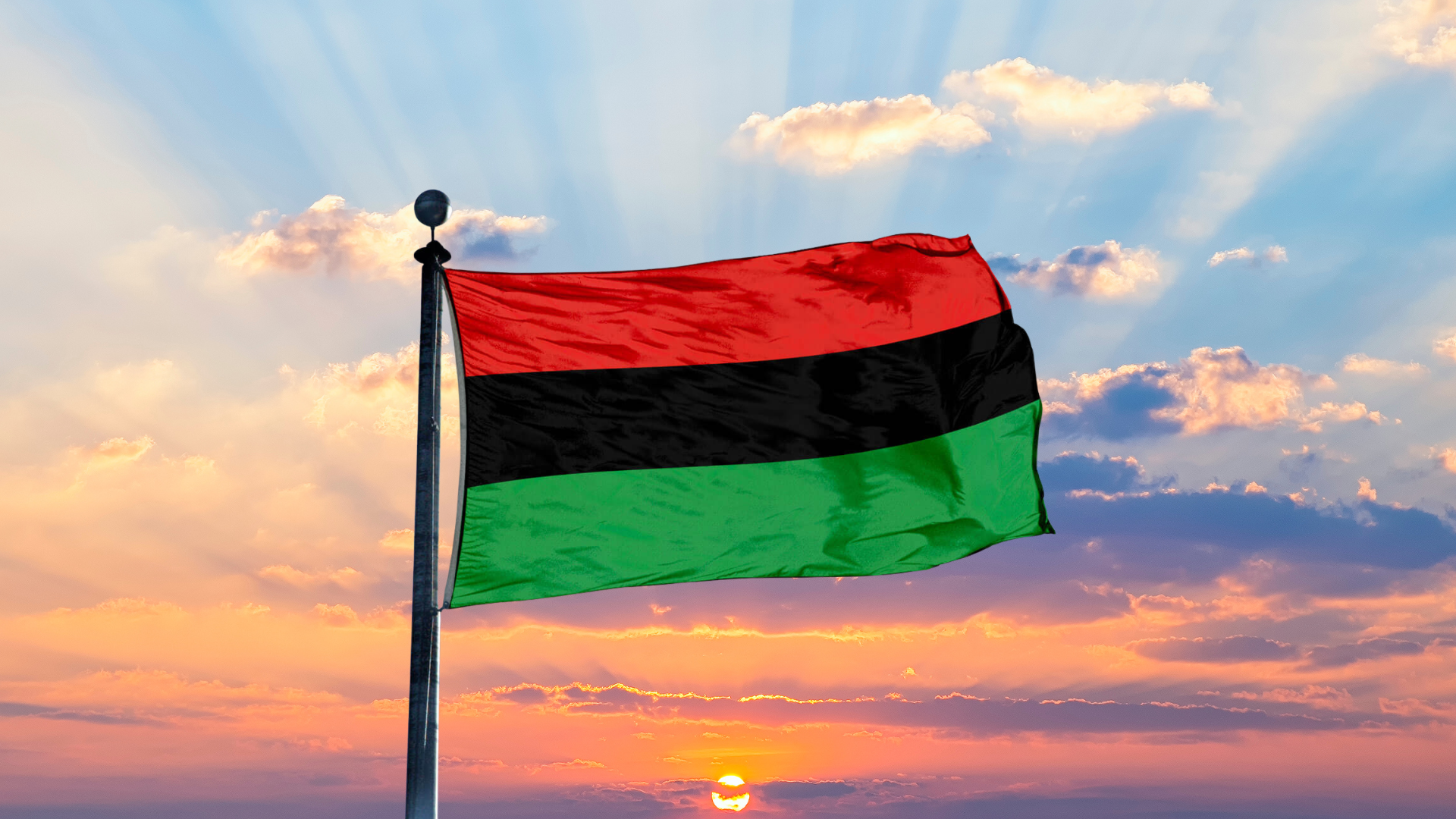
“Show me the race or the nation without a flag, and I will show you a race of people without any pride.” – Marcus Garvey
As Black History Month ends, we reflect on one of the most powerful symbols of Black unity, resilience, and identity—the Pan-African Flag. Also known as the UNIA (Universal Negro Improvement Association) Flag or the Afro-American Flag, this banner is more than just a piece of fabric. It represents liberation, pride, and solidarity for people of African descent worldwide.
The Origins of the Pan-African Flag
The Pan-African Flag was created in 1920 by the UNIA led by Marcus Garvey, a key figure in the Pan-African movement. Garvey and the UNIA introduced the flag as a direct response to the racist notion that Black people had no flag to represent them. The flag became a powerful statement of Black self-determination and unity, serving as a symbol of resistance against oppression and a rallying point for Pan-African movements worldwide.
The Meaning Behind the Colors
The Pan-African Flag consists of three bold, horizontal stripes: red, black, and green. Each color carries deep meaning, reflecting the struggles, triumphs, and aspirations of the African diaspora.
Red – Represents the blood shed by people of African descent in the fight for freedom, justice, and equality. It also symbolizes the shared history and sacrifices made throughout generations.
Black – Stands for Black identity, unity, and pride. It represents the strength and resilience of the African people, both on the continent and in the diaspora.
Green – Symbolizes the land, wealth, and natural beauty of Africa, as well as hope for a prosperous future for Black communities worldwide.
The Pan-African Flag’s Impact Today
More than a century after its creation, the Pan-African Flag remains a powerful symbol of Black pride and global solidarity. It continues to be a rallying point for civil rights movements, cultural celebrations, and social justice activism.
Where You’ll See the Pan-African Flag Today:
Protests and Marches – The flag is commonly displayed at Black Lives Matter protests, Juneteenth celebrations, and anti-racism demonstrations around the world.
Black-Owned Businesses – Many entrepreneurs use the flag in their branding to signify support for Black economic empowerment.
Government Buildings – Cities like New York, Chicago, and Philadelphia have raised the Pan-African Flag during Black History Month to honor Black heritage.
Fashion and Art – The flag’s colors influence streetwear brands, murals, and artistic movements that celebrate African culture.
Why the Pan-African Flag Matters
Flags are more than just fabric—they carry history, meaning, and identity. The Pan-African Flag is a reminder that the fight for justice is ongoing. It represents a shared history of struggle and triumph, as well as hope for a brighter future.
Show Your Pride with the Pan-African Flag
At National Capital Flag, we recognize the importance of flags as symbols of unity, identity, and pride. Whether displayed at home, at cultural events, or in the community, the Pan-African Flag remains a powerful testament to resilience and hope.
Want to display the Pan-African Flag with pride? Explore our collection and honor Black history all year round!