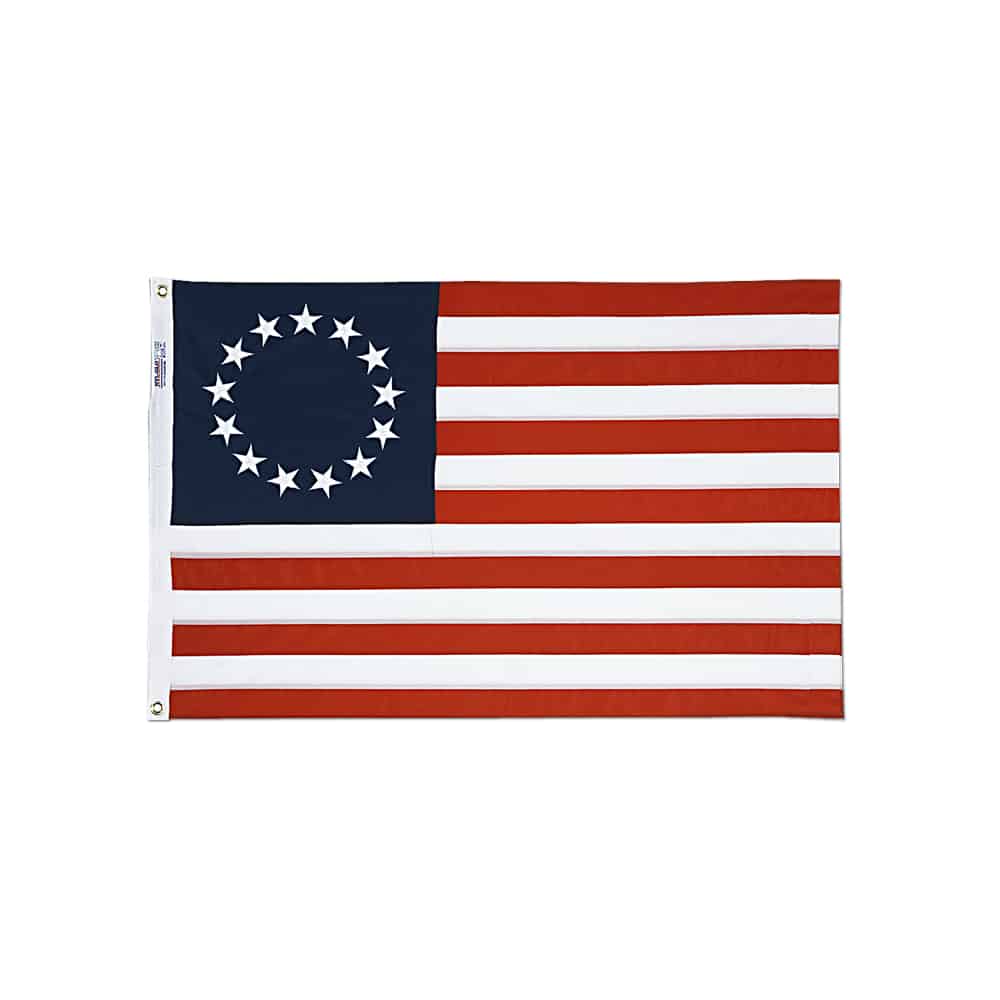
The 13-star circle flag is tied by tradition to Betsy Ross, the Philadelphia upholsterer who, according to a story her grandson told in 1870, sewed the first Stars and Stripes at George Washington’s request in 1776. Historians have never found a period record that confirms the story, and the Flag Resolution of June 14, 1777 did not specify how the 13 stars should be arranged, so several star patterns were in use at the same time. The circle became the best known of them.
Flags of the Revolutionary period were sewn from wool bunting, linen, or cotton, and cotton is the closest modern match for a flag that will be seen up close. Whatever its origin, the circle of 13 stars is now the accepted way to show the flag of the Revolutionary period. It is flown for July 4, for reenactments and living history events, and alongside the 50-star flag on historic properties. The United States Flag Code applies to historical versions of the flag as well as the current one.
Symbolism at a Glance
- Thirteen stars in a circle: the original colonies, arranged so that no colony ranks above another.
- Thirteen stripes: the same colonies, seven red and six white.
- Red, white, and blue: hardiness and valor, purity and innocence, and vigilance, perseverance, and justice.