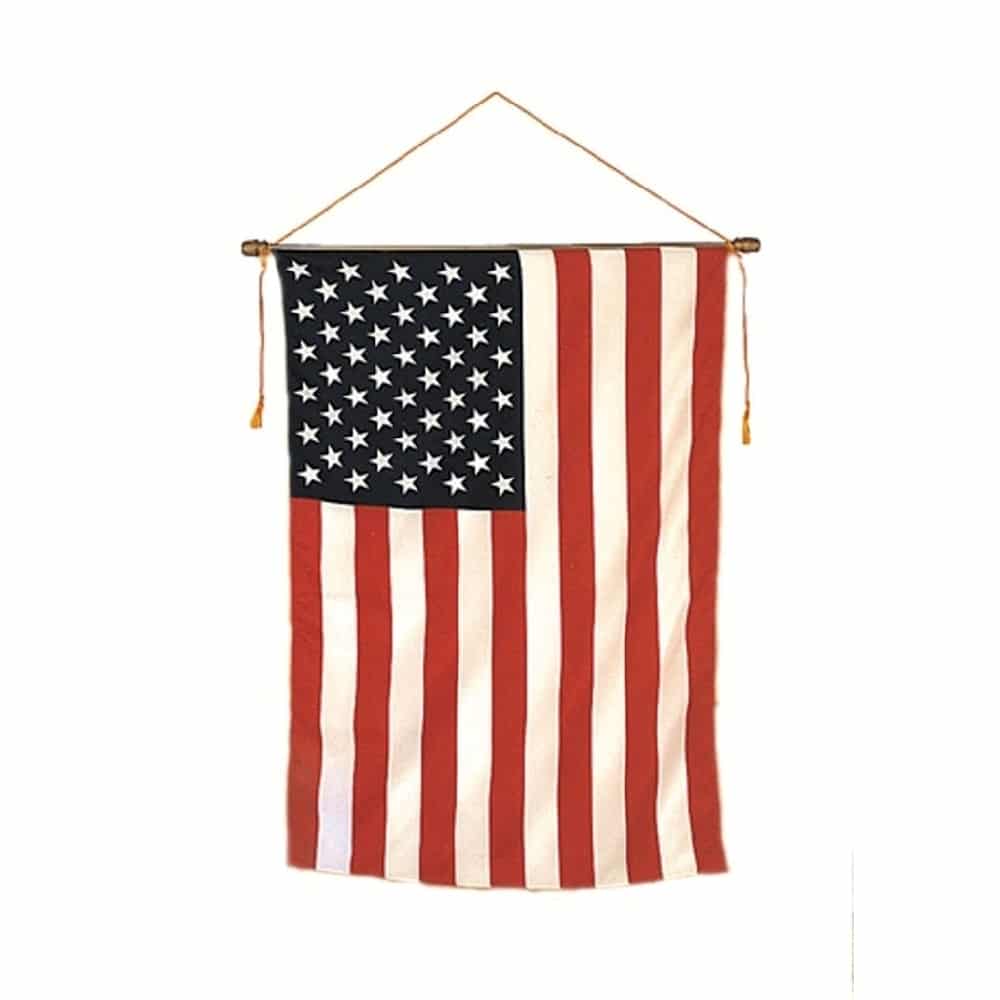
The Continental Congress adopted the Stars and Stripes on June 14, 1777, with 13 stripes for the original colonies and 13 stars for a new constellation. As states joined the Union the star count grew, and the 50-star pattern in use today was set on July 4, 1960 after Hawaii became a state. The rules for displaying the flag, including half-staff and nighttime display, are set out in the United States Flag Code.
The wall banner on a crossbar is a form borrowed from heraldic banners and church hangings, where a bar across the top lets a flag hang flat and be read like a picture. It became a common way to display the flag in schools and offices in the early twentieth century, when a classroom flag was expected in every room and floor space was scarce.
Symbolism at a Glance
- Thirteen stripes: the original colonies that declared independence.
- Fifty stars: the states of the Union, one star for each.
- Red: hardiness and valor.
- White: purity and innocence.
- Blue: vigilance, perseverance, and justice.