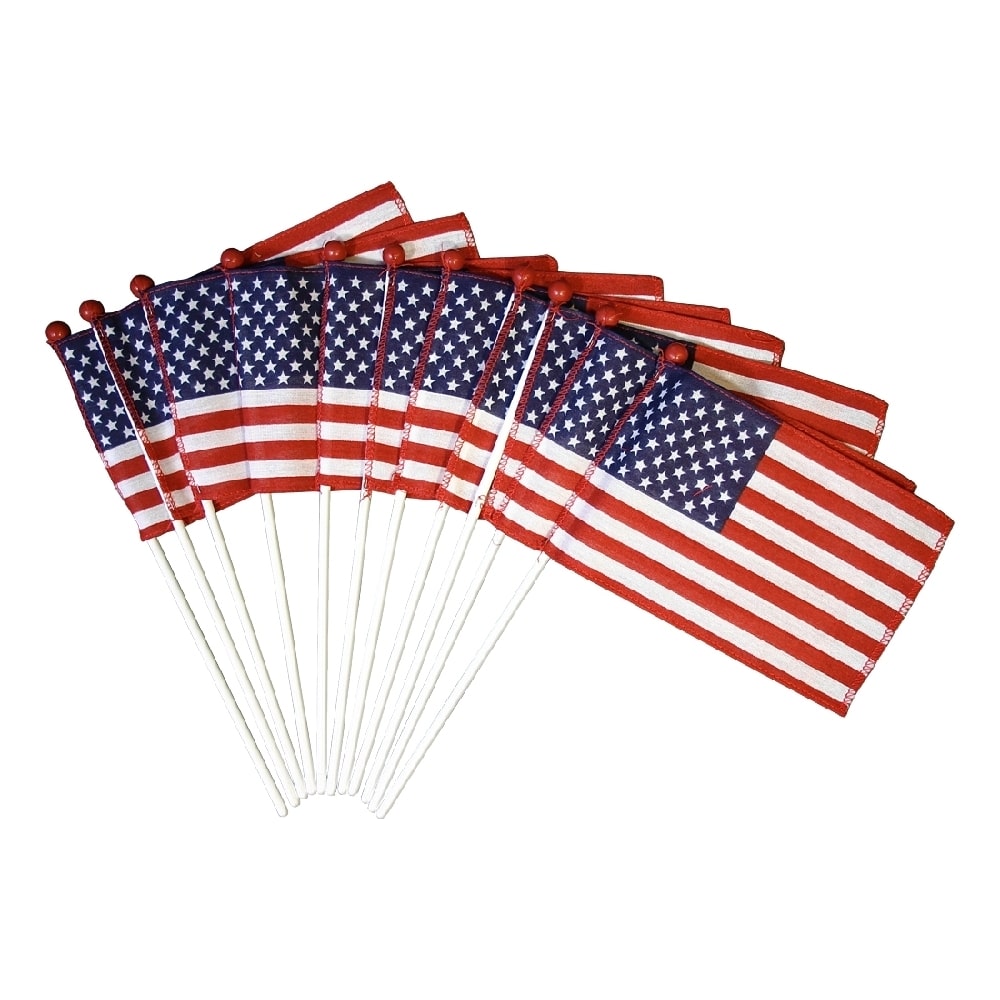
The Continental Congress adopted the Stars and Stripes on June 14, 1777, with 13 stripes for the original colonies and 13 stars for a new constellation. As states joined the Union the star count grew, and the 50-star pattern in use today was set on July 4, 1960 after Hawaii became a state. The rules for displaying the flag, including half-staff and nighttime display, are set out in the United States Flag Code.
Small mounted flags on a staff are as old as the flag itself; the earliest colors were carried, not flown. The stick flag for the crowd came later, with the parades and rallies of the late nineteenth century, when printed cotton flags on wooden staffs were handed out by the thousand. Today the same flag marks a veteran’s grave on Memorial Day, waves at a parade, and sits on a classroom desk.
Symbolism at a Glance
- Thirteen stripes: the original colonies that declared independence.
- Fifty stars: the states of the Union, one star for each.
- Red: hardiness and valor.
- White: purity and innocence.
- Blue: vigilance, perseverance, and justice.